
2026 Best Glass Water Bottle for Wholesale Buyers?

Time:2026-10-16 Author:Oliver
0%

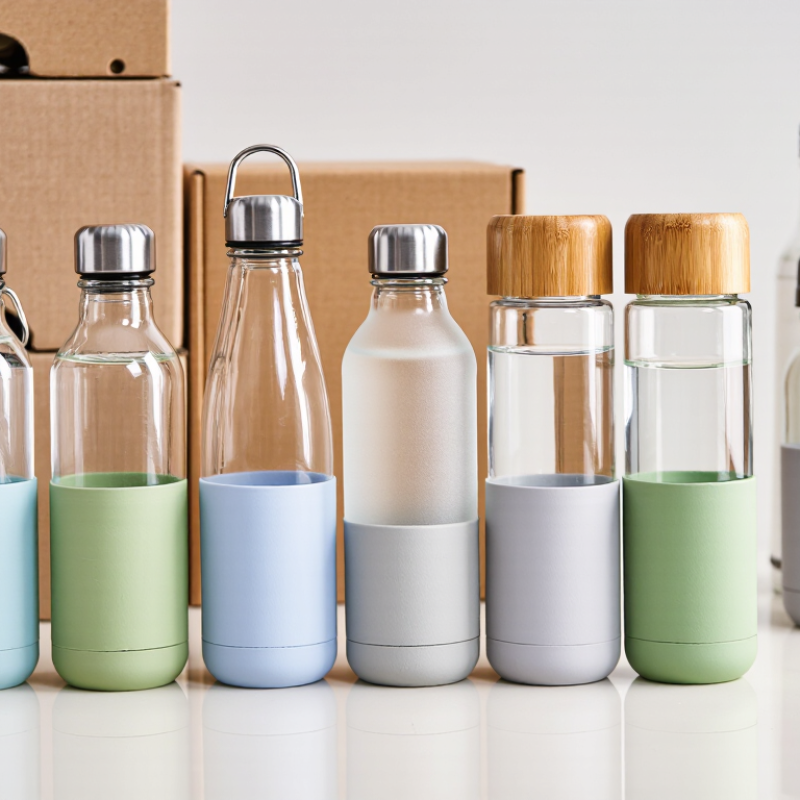
Choosing the 2026 Best Glass Water Bottle for Wholesale Buyers requires more than comparing photographs and factory prices. A reliable Glass Water Bottle must survive transport, repeated washing, and everyday handling. Buyers should examine glass thickness, protective sleeves, lid materials, leak resistance, and temperature performance. Small details matter. A loose cap can damage an entire carton.

My experience with wholesale sampling shows that product claims need practical verification. Fill each sample, invert it for several minutes, and inspect the seal. Test the bottle after repeated dishwasher cycles, if dishwasher use is part of the target market. Check whether silicone sleeves remain tight after stretching. Ask suppliers for food-contact documentation, material specifications, factory quality procedures, and recent production samples. Certifications should match the destination market, not simply appear in a sales presentation.

Packaging deserves equal attention. A strong carton with molded separators can reduce breakage, while attractive packaging may increase shelf appeal. Buyers should also compare minimum order quantities, replacement policies, customization options, and lead times. A lower unit price is not always a lower landed cost. Freight, rejected units, and customer complaints can quickly change the calculation. There is no universal best bottle. Some retailers need lightweight designs, while others prefer heavier premium glass. This evaluation can be imperfect, especially when suppliers provide limited testing data. Still, transparent questions and repeat sampling create a more defensible buying decision. Reliable sourcing takes patience.

2026 Best Glass Water Bottle for Wholesale Buyers?

Wholesale Glass Water Bottle Market Trends in 2026

Wholesale Glass Water Bottle Market Trends in 2026

In 2026, wholesale buyers are seeking glass water bottles with practical value, not decoration alone. Borosilicate glass remains popular because it handles temperature changes better than ordinary glass. Buyers also prefer protective silicone sleeves, wide mouths, and leak-resistant lids. A 500–750 milliliter capacity suits offices, gyms, and retail shelves. However, heavier glass can increase shipping costs and breakage risks. That trade-off deserves careful review.

Market demand is shifting toward transparent sourcing and lower-waste packaging. Buyers increasingly request recycled-content details, food-contact test reports, and traceable production records. Plain kraft boxes may replace bulky plastic inserts. Custom colors and printed measurements remain useful, but excessive decoration can reduce recyclability. From practical sourcing experience, sample testing often reveals problems hidden in product photos. A lid may look secure but loosen after repeated washing. Some sleeves also smell strongly when first opened. These details need honest inspection.

Tips: Request samples from each production batch. Test bottles with hot and cold water. Drop-test packed cartons on a warehouse floor. Check lid threads, odor, coating durability, and barcode placement. Ask suppliers for clear quality standards and replacement procedures. Do not choose only by the lowest unit price. A slightly higher price may reduce returns, but this is not guaranteed. Track customer feedback after launch. Trends change quickly.

2026 Best Glass Water Bottle for Wholesale Buyers

Wholesale Glass Water Bottle Market Trends in 2026

The 2026 planning index highlights the product factors most relevant to wholesale buyers. Durability, leak-proof performance, reusable design, and customization are expected to remain the strongest purchasing priorities, while lightweight construction and sustainable packaging continue to support market growth. The scores are directional planning benchmarks rather than company or brand sales data.

Key Materials, Designs, and Safety Standards to Compare

2026 Best Glass Water Bottle for Wholesale Buyers?

Material selection should begin with glass composition, not appearance. Borosilicate glass tolerates sharper temperature changes than ordinary soda-lime glass. That matters when buyers fill bottles with hot tea, chilled water, or ice. According to the Glass Packaging Institute, glass is endlessly recyclable without quality loss. However, recyclability does not guarantee durability. A thick base, rounded shoulder, and controlled annealing can reduce breakage during transport.

Design details affect wholesale returns. A 500–750 millilitre capacity suits office, fitness, and hospitality use, while a wider mouth simplifies cleaning. Silicone sleeves improve grip, but buyers should inspect odor, seam quality, and removal difficulty. The 2024 Grand View Research analysis identifies convenience and reusable-product demand as major market drivers. That trend is useful, but market growth alone cannot prove product safety. Some attractive lids still hide weak threads.

Safety documentation deserves close comparison. Ask for migration-test records covering the glass, lid, gasket, paint, and adhesive. FDA food-contact requirements, EU Framework Regulation 1935/2004, and relevant ASTM impact-testing methods provide useful reference points. Certification claims should match the exact model and production site. NSF reports that material safety depends on the complete food-contact assembly, not one component. Small detail. Very important.

Sample testing should include drop simulation, thermal cycling, leak checks, and repeated washing. I would also inspect ten random units, not only one showroom sample. That extra step feels slow. It can reveal uneven rims, loose caps, or sleeve distortion before a large order is approved.

How to Evaluate Suppliers, Certifications, and Production Capacity

2026 Best Glass Water Bottle for Wholesale Buyers?

A reliable supplier should show more than attractive samples. Ask for food-contact test reports, material declarations, and traceability from batch to shipment. For soda-lime glass, check thermal-shock resistance, wall thickness, neck dimensions, and closure compatibility. Certifications matter, but they need context. The ISO Survey 2023 recorded over 1.26 million ISO 9001 certificates worldwide. However, ISO 9001 confirms a management system, not automatic bottle safety or durability. Request current audit certificates and product-specific laboratory results.

Production Capacity Requires Evidence

Production capacity requires evidence. Ask for furnace output, forming-line numbers, monthly capacity, mold ownership, and recent delivery records. Compare these figures with your forecast, including seasonal peaks. FEVE’s 2023 industry data reported about 39.5 million tonnes of container-glass production in Europe. That scale does not mean every factory can handle your order. A factory may quote 500,000 pieces monthly, yet deliver fewer during maintenance or color changes. I would test this risk with a pilot order and a written lead-time commitment.

Inspect the Factory if Possible

Inspect the factory if possible. Review incoming-material checks, annealing controls, automated inspection, carton compression tests, and breakage data. Ask how many defects occurred in the last three batches. A supplier unwilling to share that information deserves caution. I would also question unusually low prices. They may reflect thinner walls, weaker packaging, or overlooked testing. My own evaluation would score quality, capacity, documentation, and communication separately. A perfect spreadsheet is impossible. Real production is less tidy.

Pricing, Minimum Order Quantities, and Customization Options

2026 Best Glass Water Bottle for Wholesale Buyers?

Wholesale buyers should compare landed cost, not only the factory quote. Standard glass bottles often range from $2.80 to $6.50 per unit, depending on capacity, coating, lid design, and packaging. Prices usually improve at 1,000, 3,000, and 5,000 units. However, freight, inspection, cartons, and replacement units can change the final margin. Ask for a complete quotation with delivery terms and sample charges.

Minimum order quantities vary by customization level. Plain stock bottles may start at 300 to 500 pieces. Printed logos often require 1,000 units, while custom molds can require 3,000 or more. Customization may include silicone sleeves, color matching, laser engraving, gift boxes, and leak-resistant lids. Request a physical sample before approving mass production. Small details matter. A sleeve that looks secure can shift after repeated washing. A printed logo can also lose contrast on curved glass.

Tips: Compare two sample rounds, not one. Confirm logo size, glass thickness, lid materials, carton strength, and dishwasher testing. Keep a written approval record. It reduces disputes, although it cannot prevent every production mistake. Leave budget for 2% to 5% replacement stock. This feels wasteful, but damaged cartons and minor defects are sometimes underestimated. Check whether the supplier can repeat the same color and finish for future orders. Consistency is harder than it sounds.

Choosing the Best Glass Water Bottle for Your Target Market

Choosing the Best Glass Water Bottle for Your Target Market

Wholesale buyers should start with the user, not a catalog photograph. A gym audience may prefer a 600 ml bottle that fits a car holder. Office users may value a slim shape, quiet silicone protection, and easy cleaning. Families often need larger capacity and a secure cap. Ask where the bottle will be used. A beautiful design can still fail on a crowded commute.

Material selection affects both performance and customer trust. Borosilicate glass usually handles temperature changes better than ordinary glass, but it may increase cost. A protective sleeve can improve grip and reduce damage from small impacts. Check the cap thread, seal, and drinking opening by hand. Small leaks create large wholesale complaints. Request food-contact documentation and independent test reports for the target market. Requirements differ between countries, so one certificate may not cover every sale.

Sampling should include repeated opening, washing, packing, and transport checks. Test bottles with cold water, warm water, and realistic drops onto suitable surfaces. Do not rely only on laboratory claims. Inconsistent cap fitting is a warning sign. So is unclear carton labeling. A perfect bottle does not exist. I would rather choose a slightly heavier model with dependable sealing than a lighter model that looks impressive online. Still, weight can discourage daily use, and that trade-off deserves honest customer feedback before a large order.

2026 Best Glass Water Bottle for Wholesale Buyers? - Choosing the Best Glass Water Bottle for Your Target Market

Indicative wholesale ranges are shown in USD per unit for orders of approximately 500 units or more. Actual pricing depends on glass thickness, lid materials, decoration, packaging, testing, order quantity, and shipping terms.
Bottle Type Typical Capacity Approx. Empty Weight Construction & Protection Closure & Mouth Main Advantages Best-Fit Target Market Key Wholesale Considerations Indicative Wholesale Price Market Fit
Compact Everyday Bottle 350–450 ml 250–380 g Single-wall borosilicate or soda-lime glass; commonly supplied with a silicone sleeve. Screw-top lid; approximately 28–38 mm drinking opening. Light and easy to carry; suitable for short commutes and smaller bags. Office users Students Gift sets Prioritize leak testing, sleeve fit, compact cartons, and low shipping volume. US$2.50–5.50 ★★★★☆
Standard Daily Bottle 500–650 ml 350–500 g Single-wall glass with a protective silicone sleeve or bumper base. Screw-top lid; regular or wide drinking opening. Balanced capacity, weight, usability, and retail appeal. General retail Corporate programs Fitness Usually the safest volume for broad-market purchasing; check replacement-lid availability. US$3.00–6.50 ★★★★★
Large Hydration Bottle 750–1,000 ml 500–750 g Thicker single-wall glass or reinforced glass with a full or partial silicone cover. Wide-mouth screw lid; some designs include a carry loop. Fewer refills and strong appeal for active users and workplace hydration. Outdoor users Gyms Workplaces Higher freight weight and breakage exposure; require stronger inner packaging and drop testing. US$4.50–9.00 ★★★★☆
Infuser Glass Bottle 500–750 ml 400–650 g Single-wall glass with a removable stainless-steel or food-contact plastic infuser. Screw lid; infuser section typically sits below the lid. Supports fruit-infused water, tea, and flavored beverages; higher perceived value. Wellness retail Tea shops Lifestyle gifts Inspect infuser welds, odor resistance, cleaning access, and spare-part compatibility. US$4.50–9.50 ★★★★☆
Double-Wall Glass Bottle 350–500 ml 450–700 g Double-wall glass construction; often supplied with a silicone grip or protective sleeve. Screw-top lid; opening size varies by design. Improved hand comfort and reduced exterior condensation compared with many single-wall designs. Premium retail Cafés Corporate gifts More complex manufacturing and higher breakage risk; confirm thermal-shock testing and lid sealing. US$6.00–12.00 ★★★★☆
Wide-Mouth Utility Bottle 600–1,000 ml 450–750 g Single-wall glass with a broad protective sleeve or silicone base. Wide-mouth screw lid; generally easier to fill and clean. Suitable for ice cubes, thicker beverages, and thorough manual cleaning. Outdoor retail Meal-prep users Active lifestyles Confirm mouth diameter, lid gasket quality, dishwasher guidance, and sleeve durability. US$4.00–8.50 ★★★★☆
Glass Bottle with Carry Loop 500–750 ml 380–600 g Single-wall glass with a silicone sleeve and integrated or attached carry loop. Screw-top lid with loop or handle attachment. Convenient for commuting and carrying between meetings or activities. Commuters Travel retail Promotional merchandise Test loop tensile strength, attachment points, leak resistance, and logo-print durability. US$3.50–8.00 ★★★★☆
Premium Minimalist Bottle 450–650 ml 300–500 g Clear or lightly tinted glass with a simple silicone ring, sleeve, or base protector. Minimal screw lid; design focuses on a clean silhouette and easy branding area. Strong visual appeal and suitable for premium packaging or curated retail collections. Design stores Hotels Premium gifts Focus on surface finish, color consistency, print registration, packaging presentation, and defect rate. US$4.00–10.00 ★★★★☆

FAQS

Why are wholesale buyers choosing glass water bottles in 2026?

Buyers want practical products, not decoration alone. Glass offers a clean appearance and suits offices, gyms, and retail shelves.

Which bottle capacity fits most target markets?

A 500–750 milliliter capacity works for many users. Around 600 milliliters may fit gym bags and vehicle holders. User habits still vary.

Is borosilicate glass better than ordinary glass?

Borosilicate glass usually handles hot and cold temperature changes better. It may also cost more. Do not treat it as unbreakable.

What bottle features should wholesalers inspect?

Check wide mouths, silicone sleeves, cap threads, seals, and drinking openings. A quiet sleeve can improve office use. Small leaks become large complaints.

How should buyers test samples before ordering?

Fill bottles with cold and warm water. Open and wash them repeatedly. Perform suitable drop tests on packed cartons. Test it yourself.

What packaging details affect wholesale costs?

Heavier glass can increase shipping expenses and breakage risks. Plain kraft boxes may reduce unnecessary packaging. A cheaper bottle can still create higher returns.

Which quality documents should suppliers provide?

Request food-contact documentation, independent test reports, production records, and clear quality standards. Confirm whether documents fit the intended market. One certificate may not cover every country.

How can buyers detect problems hidden in product photos?

Request samples from each production batch. Check odor, coating durability, barcode placement, and cap consistency. Some sleeves smell strongly when opened. That deserves review.

Should wholesalers always choose the lowest unit price?

No. A slightly higher price may reduce returns, but this is not guaranteed. Track customer feedback after launch. Trends change quickly.

Conclusion

In 2026, the Glass Water Bottle market is expected to focus on safety, sustainability, practical design, and reliable supply. Wholesale buyers should compare materials such as borosilicate or standard glass, along with protective sleeves, leak-resistant lids, ergonomic shapes, and easy-clean features. Product selection should also consider relevant food-contact safety documentation, testing reports, and manufacturing quality controls to reduce purchasing risks and support consistent product performance.

A dependable supplier should demonstrate clear certifications, stable production capacity, transparent quality procedures, and the ability to meet delivery schedules. Buyers should evaluate pricing together with minimum order quantities, packaging requirements, customization options, and sample approval processes. The best Glass Water Bottle will depend on the target market: retail customers may prefer stylish colors and gift-ready packaging, while corporate or promotional buyers may prioritize logo placement, durability, and cost efficiency. A balanced review of product quality, supplier reliability, customization flexibility, and total landed cost can help wholesale buyers make a practical decision.

Oliver

Oliver

Oliver is a seasoned marketing professional with a wealth of expertise in driving brand awareness and engagement. With a deep understanding of our company's product offerings, he consistently delivers high-quality content that enriches our professional blog. His insights not only shed light on......