Direct OEM/ODM Lineup
Flagship 32oz & Big Capacity Eco Drinkware Series
Precision-engineered closures, food-grade ergonomic profiles, and advanced decorative options. Factory-direct tooling ready for volume procurement and private label deployment.
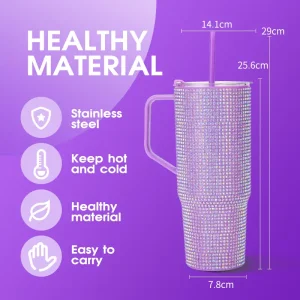
China Drill Sticker - 40 Single-layer YS-2442 Manufacturer, Factories
View Product Details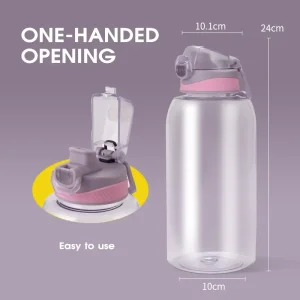
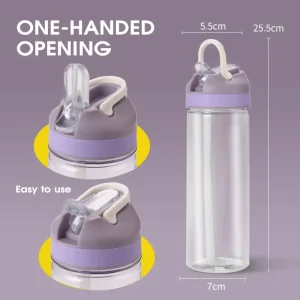
China Eco - Spring Loaded Cap YS-2434 Manufacturers, Manufacturer
View Product Details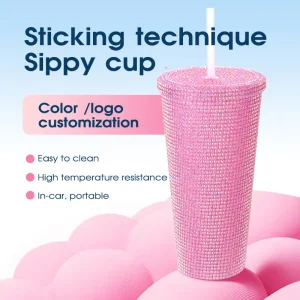
China Straw Cup - Drill Sticker Supplier, Factories
View Product Details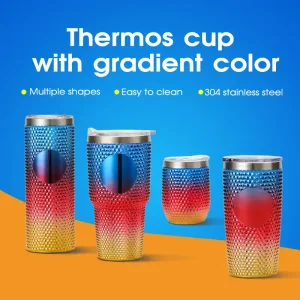
Wholesale Combination - Rhinestone Electroplating Gradient Manufacturers, Manufacturer
View Product Details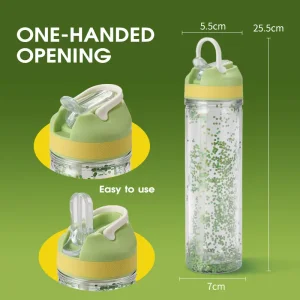
Wholesale Eco - Spring Loaded Cap YS-2096 Manufacturers, Suppliers
View Product Details
China Combination - 3-in-1 Set Dol Manufacturers, Suppliers
View Product Details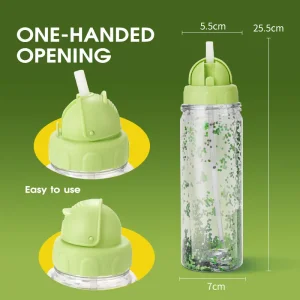
Wholesale Eco - Helmet Cap YS-087 Manufacturers, Suppliers
View Product Details
Macro Environmental Architecture
Decarbonization, Circular Economy & Global ESG Mandates
As enterprise brands face stringent regulatory deadlines—including the European Union’s Packaging and Packaging Waste Regulation (PPWR) and US State-level Extended Producer Responsibility (EPR) statutes—the 32oz big capacity bottle serves as the critical transition vehicle from single-use virgin polymers to closed-loop recycled polyethylene terephthalate (RPET).
Scope 3 Emissions Curtailment
Deploying certified post-consumer recycled (PCR) resin cuts product-level lifecycle greenhouse gas (GHG) emissions by up to 79% compared to virgin petrochemical PET. Our cradle-to-gate Life Cycle Assessment (LCA) verifies quantifiable reductions in embodied carbon per 1,000 completed 32oz units.
ISO 14044 LCA
-79% CO2e
Carbon Ledger
EU PPWR & CA SB 54 Alignment
The regulatory landscape requires beverage packaging to contain a minimum of 25% recycled plastic by 2025 and 30% by 2030 across European operations. Our manufacturing protocols allow flexible PCR dosing ratios from 30%, 50%, to 100%, fully supported by complete Global Recycled Standard (GRS) chain-of-custody documentation.
PPWR Article 6
SB 54 Compliant
EPR Tax Offset
Full Supply Chain Traceability
Eliminating "greenwashing" liability: every container shipped features verifiable Transaction Certificates (TC) tracking the post-consumer feedstock from certified sorting infrastructure through SSP decontamination directly to our cleanroom injection molds.
GRS 4.0 TC
Batch Audit
Zero Contamination
| Environmental Indicator (Per 10,000 units of 32oz Bottles) | Virgin PET (vPET) Benchmark | 50% RPET Blend | 100% Food-Grade RPET (Ronchine) | Verification Protocol |
|---|---|---|---|---|
| Embodied Carbon Equivalent (kg CO₂e) | 1,840 kg | 1,120 kg -39.1% | 386 kg -79.0% | ISO 14067 GHG Protocol |
| Cumulative Energy Demand (CED, MJ) | 37,600 MJ | 23,400 MJ | 10,200 MJ -72.8% | Ecoinvent 3.8 Database |
| Industrial Process Water Consumption (m³) | 42.5 m³ | 31.0 m³ | 19.8 m³ -53.4% | Water Footprint Network |
| Virgin Petrochemical Consumption (Barrels Oil) | 14.8 bbl | 7.4 bbl | 0.0 bbl 100% Fossil Free | Feedstock Mass Balance |
Material Science & Rheology
Technical Roadmap: Upcycling Thermodynamics & Stretch Blow Molding
Transforming recycled flake into structural, crystal-clear 32oz (approx. 1000ml) containers requires advanced polymer stabilization, decontamination physics, and specialized mold flow balancing to eliminate hazing, brittleness, and gate crystallization defects.
Solid-State Polycondensation (SSP)
Thermal shear in secondary recycling degrades the polymer chain length. Our integrated SSP process rebuilds intrinsic viscosity (IV) to a uniform 0.80–0.84 dL/g, securing the structural tensile strength needed for 32oz pressurized drop-resistance.
IV: 0.82 ±0.02
Chain Re-linking
High-Vacuum Decontamination
Flakes undergo deep thermal decontamination in high-vacuum desiccant reactors operating at 210°C under <0.05 mbar. This strips all volatile organic compounds (VOCs) and secondary contaminants down below FDA/EFSA non-detectable thresholds.
Super-Clean Reactor
<1 ppm VOC
Spectrophotometric Haze Control
By dosing food-contact toners and advanced phosphite thermal stabilizers during the melt phase, we balance the yellowing index (b* coordinate < 1.5) and maximize optical clarity (L* > 85), yielding an aesthetic rivaling virgin virgin copolymer.
CIE L*a*b* Optimized
Glass Clarity
Stretch Blow Molding (SBM) Physics
Producing large-diameter 32oz bodies requires exact infrared preform heating profiling. Dual-axis stretch ratios (hoop ratio 3.6:1, axial ratio 2.4:1) guarantee even wall thickness distribution (0.42mm–0.65mm) and robust petaloid base stability.
Bi-axial Stretch
Finite Element Analysis
Smart Manufacturing Ecosystem
China Factory 4.0: Wuyi Supply Chain Dynamics & Operational Scale
Operating from Tongqin Industrial Park in Wuyi County, Jinhua, Zhejiang, Wuyi Ronchine Industry & Trade Co., Ltd. anchors a highly consolidated hardware, injection molding, and drinkware cluster. Our automated facility integrates Industry 4.0 IoT instrumentation to deliver unprecedented cost-efficiency, cycle compression, and reliable volume scaling.
10+
Years Engineering Expertise
100+
Patented Molds & Processes
200+
Skilled Technical Personnel
5,000+
Enterprise Sourcing Clients
AI High-Speed Machine Vision
Every 32oz container passes through our 360-degree inline optoelectronic inspection tunnels at 18,000 bottles per hour. High-resolution CCD cameras verify neck thread ovality, gate black-speck contamination, wall haze, and seal surface flatness with sub-millimeter tolerances.
100% Inline QC
Defect < 50 PPM
Zhejiang Cluster Synergy
Within a 20-kilometer radius of our Wuyi plant lies an integrated supply ecosystem: masterbatch compounding, precision CNC mold fabrication, food-grade silicone seals, and stainless steel hardware. This clustering mitigates supply chain shocks and slashes sample tooling lead times to 7–15 days.
Tongqin Industrial Hub
Rapid Tooling
Port Proximity & Global Forwarding
Direct arterial highway access positions our containers within 2.5 hours of Ningbo-Zhoushan Port—the world’s busiest port by cargo tonnage—and 3.5 hours from Shanghai Port. This logistic advantage reduces drayage expenses and ensures predictable ocean freight sailings.
Ningbo Port Direct
FOB / CIF / DDP
Procurement Specifications
Global Sourcing Matrix: Technical Customization & Tooling Parameters
Engineered for international brand directors, sourcing managers, and supply chain heads. Tailor every physical touchpoint of the 32oz platform—from neck threading geometry to multi-layer barrier additions and surface aesthetics.
Cap & Closure Modularity
Compatible with universal neck finishes (38-400, 53mm wide mouth, 63mm ice cube intake). Standardized interface accepts spring-loaded flip caps (YS-151B / YS-2434), protective helmet caps (YS-087 / YS-2314B), integrated silicone straw spouts, and magnetic tethered handles.
Food-Grade PP / Tritan
Silicone Gasket Seal
Surface Finishing & Decoration
Maximize retail velocity with our proprietary robotic surface finishing suites: 360° gradient electrostatic powder spraying, vacuum metallization/electroplating, silk-screen Pantone matching, and precision rhinestone drill sticker bonding with dishwasher-safe structural adhesives.
Rhinestone Hand-Craft
Vacuum Metallization
Container Packing Optimization
Each 32oz bottle is dimensioned specifically for cubic container space maximization. Customized master carton configurations and pallet loading schematics yield up to 14,200 units per 40ft High Cube (HQ) container, reducing landed logistics costs per bottle.
CBM Optimization
Drop-Tested Cartons
| Procurement Parameter | Standard Catalog Models | Semi-Custom (Color / Finish / Logo) | Full Custom OEM Tooling (Bespoke CAD) |
|---|---|---|---|
| Minimum Order Quantity (MOQ) | 1,000 – 3,000 units | 3,000 – 5,000 units | 10,000 – 20,000 units |
| Sample Lead Time | 2 – 3 working days | 7 – 10 working days | 15 – 25 working days (Tooling T0) |
| Mass Production Lead Time | 15 – 20 days | 25 – 30 days | 35 – 45 days |
| Tooling Cost Allocation | $0 (Factory Owned) | $0 (Screen / Fixture fee only) | Amortized upon volume threshold |
| Quality Standard (AQL) | AQL 1.5 Major / 4.0 Minor | AQL 1.0 Major / 2.5 Minor | AQL 0.65 Major / 1.5 Minor (Pharma grade) |
Audited Compliance Framework
Regulatory Assurances, Food Safety & Laboratory Verification
Exporting food-contact polymers into North America, Europe, and Asia-Pacific demands uncompromising adherence to non-intentionally added substance (NIAS) limits, overall migration testing, and chemical safety mandates.
FDA 21 CFR 177.1630 & EFSA
Our RPET feedstock and additive formulations comply with US FDA Condition of Use C through G and EU Regulation No 10/2011 (amended by EU 2020/1245). Third-party tests verified by SGS/Intertek show non-detectable levels of heavy metals (lead, antimony < 0.04 mg/kg), phthalates, and bisphenols (BPA, BPS, BPF free).
SGS Tested
BPA-Free Certified
GRS 4.0 Chain of Custody
We hold certified Global Recycled Standard (GRS 4.0) manufacturing credentials. Sourcing clients receive authenticated batch Transaction Certificates (TC) showing exactly how much post-consumer material is incorporated into every delivery, guaranteeing 100% legal compliance for national recycled plastic tax credits.
GRS Scope Cert
Batch TC Provided
Rigorous Factory In-House Stress Lab
Prior to packout, each production lot undergoes standardized torture testing: 1.5-meter drop tests onto hard concrete at 4°C (chilled liquid simulation), dynamic vacuum chamber seal leak tests at -0.05 MPa for 5 minutes, and automated 10,000-cycle cap hinge fatigue actuations.
Drop Tested (ASTM D5276)
Vacuum Leak Proof
Next-Generation Roadmap
Future Outlook: Chemical Recycling, Smart Caps & DRS Integration
The future of large-capacity reusable drinkware combines mechanical recycling resilience with breakthrough depolymerization chemistry and digital intelligence to satisfy global circular economies.
Chemical Depolymerization (BHET / DMT)
Partnering with domestic petrochem pioneers, we are transitioning toward chemically recycled monomer feedstock (BHET glycolysis). This allows complex colored and blended PET scrap to be unzipped back to virgin-equivalent monomers with 0% loss of intrinsic viscosity.
Infinite Recyclability
Pure Monomer PET
Tethered Cap Systems (EU Directive 2019/904)
In compliance with mandatory single-use plastic tethering requirements, our new 2026/2027 cap tooling line locks closures to the 32oz bottle collar with minimum 25N retention force, preventing closure littering and boosting municipal post-consumer reclaim rates.
Mandatory Tethering
25N Retention Force
Digital Watermarking & NFC Smart Caps
Collaborating with enterprise beverage clients on integrated HolyGrail 2.0 digital watermarking embedded directly into bottle sidewall molds, alongside NFC-enabled smart caps that track hydration metrics and automate redemption within national Deposit Return Systems (DRS).
HolyGrail 2.0
NFC Connected
Technical & Procurement FAQ
Frequently Answered Sourcing Inquiries
Key mechanical, chemical, and commercial questions resolved by our chief engineering and international logistics staff.
What prevents yellowing and hazing in your 32oz RPET bottles compared to inferior recycled containers?
Secondary yellowing occurs due to repeated thermal oxidation cycles during mechanical recycling, producing conjugated chromophores. Wuyi Ronchine mitigates this via three strictly controlled processes: First, we source solely Grade-A washed bottle flakes with <10 ppm PVC contamination. Second, our vacuum solid-state polycondensation (SSP) restores chain structure under an oxygen-free nitrogen atmosphere. Third, we micro-dose food-grade optical blue toners and phosphite melt stabilizers. This holds the spectrophotometer L* clarity above 85 and limits the b* yellowing index below 1.5, matching commercial virgin bottle appearance.
How does Wuyi Ronchine ensure food contact safety and compliance with FDA and EFSA regulations?
We exclusively utilize post-consumer RPET resins processed through decontamination systems evaluated and issued with Letters of No Objection (LNO) by the US FDA and affirmative opinions by the European Food Safety Authority (EFSA). Our cleanroom molding cells in Wuyi maintain strict continuous monitoring for Non-Intentionally Added Substances (NIAS). Complete migration testing to EU Regulation (EU) No 10/2011 (using 10% ethanol, 3% acetic acid, and vegetable oil simulants) is periodically validated through accredited labs (SGS, TÜV Rheinland, Intertek).
What are the thermal limits for 32oz big-capacity RPET bottles during hot filling or dishwashing?
Standard single-stage or two-stage amorphous RPET containers possess a glass transition temperature (Tg) of approximately 67°C to 72°C. Consequently, standard 32oz RPET bottles are rated strictly for cold beverages and ambient liquids up to 55°C (131°F). Exposing them to boiling water or high-heat commercial dishwasher cycles will cause thermal shrinkage and dimensional deformation. For clients demanding hot-fill capabilities (up to 85°C–90°C), we engineer custom heat-set blow molds utilizing circulating oil mold temperature controllers that induce secondary crystalline morphology in the sidewalls, or recommend our Tritan/Stainless Steel composite alternatives.
Can we inspect the Wuyi manufacturing facility or coordinate independent third-party audits?
Absolutely. We welcome on-site buyer factory tours, live high-definition video audits, and third-party commercial verification by agencies such as SGS, Bureau Veritas, or QIMA. Our factory operations, social compliance standards, and quality management systems are regularly audited against ISO 9001, ISO 14001, BSCI, and Sedex SMETA criteria.
What is the standard tooling timeline and mold amortization policy for custom-designed 32oz geometries?
For bespoke geometries, our CAD/CAM engineers generate complete 3D digital mockups and Moldflow rheology simulations within 48 to 72 hours. Prototype 3D printed/silicone test samples take 5 to 7 days. Pilot single-cavity prototype steel tooling takes 15 to 20 calendar days (T0 samples). Upon approval, full multi-cavity production blow molds (up to 8 cavities) are delivered in 25 to 30 days. Full tooling fees are typically 100% credited back to the customer upon reaching specified annual volume agreements.
How do you manage Acetaldehyde (AA) migration to avoid taste alteration in drinking water?
Acetaldehyde is an organic byproduct of polyester degradation that can impart a sweet, chemical flavor to pure water at levels as low as 20 ppb. We strictly control AA levels by utilizing low-shear, barrier-screw injection barrels operating at optimized melt temperatures (below 270°C). Furthermore, we blend certified organic anthranilamide-based AA scavenger masterbatches into our virgin-RPET formulations. Residual head-space AA is constantly monitored via gas chromatography (GC) to guarantee residual levels remain safely below 1.0 ppm, preserving pristine beverage flavor neutrality.
Extended Catalog & Specialty Lines
Specialty Closures, Rhinestone Adornment & Custom Sets
Expand your private label line with our diverse collection of helmet caps, spring-loaded push lids, precision electroplating, and rhinestone craftsmanship.
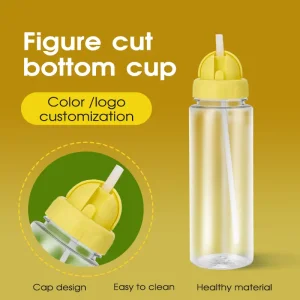
China Eco - Helmet Cap YS-2314B Manufacturers, Factories
View Product Details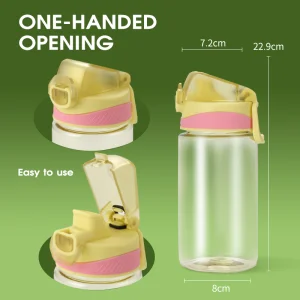
China Eco - Spring Loaded Cap YS-2431 Manufacturers, Manufacturer
View Product Details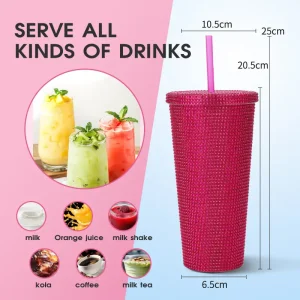
Wholesale Drill Sticker - Straw Cup YS-004 Manufacturer, Factories
View Product Details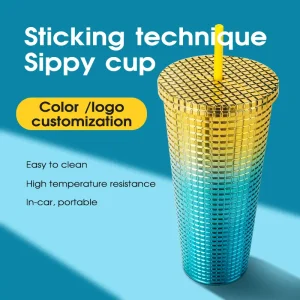
Wholesale Straw Cup - Grid Electroplating Manufacturer, Factories
View Product Details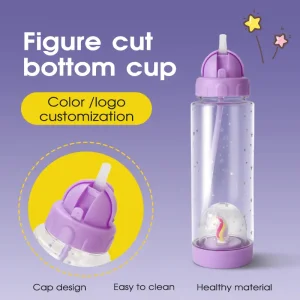
China Eco - Helmet Cap YS-087A Suppliers, Factory
View Product Details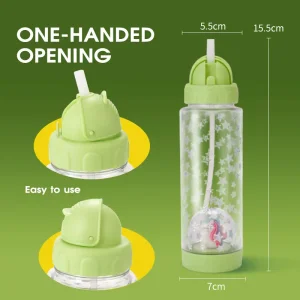
China Eco - Helmet Cap YS-087B Manufacturer, Supplier
View Product Details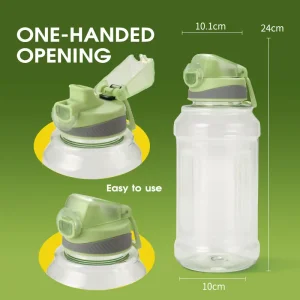
Wholesale Eco - Spring Loaded Cap YS-2433 Manufacturer, Factory
View Product Details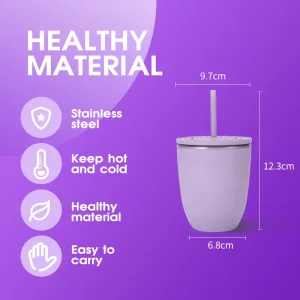
Wholesale Straw Cup - Egg-shaped Cup YS-188 Suppliers, Factories
View Product DetailsInitiate Your 32oz RPET Manufacturing Program
Connect directly with the factory engineering team at Wuyi Ronchine. Request physical material sample kits, verify GRS audit credentials, or submit your bespoke CAD drawings for an immediate DFM (Design for Manufacturability) feasibility review.